Artificial intelligence is transforming donor eligibility and suitability review by helping tissue banks and organ procurement organizations (OPOs) optimize the time to process complex donor records. But as AI adoption grows, one critical question continues to surface:
How is sensitive donor data protected throughout the AI process?
The answer starts with secure AI data flow for donor eligibility.
For organizations evaluating AI solutions, understanding how data moves through a platform is just as important as the insights the platform generates. A secure, well-governed data flow helps protect sensitive information, supports regulatory compliance, and gives donor review teams confidence that the technology they rely on is handling data responsibly.
Why Secure AI Data Flow for Donor Eligibility Matters
Donor eligibility decisions depend on information from many sources, including clinical notes, laboratory results, medical and social histories, recovery documentation, and electronic medical records. These records often arrive in different formats and contain highly sensitive protected health information (PHI).
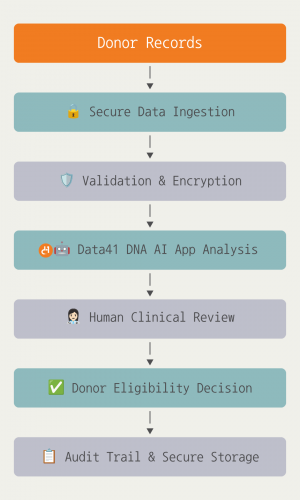
Secure AI data flow for donor eligibility ensures this information is encrypted, validated, processed, and protected throughout every stage of the review process. Rather than simply moving data from one system to another, a secure workflow maintains data integrity, limits access to authorized users, and creates accountability through audit logging and governance controls.
When data security is built into the foundation of an AI platform, organizations can focus on making informed donor eligibility decisions instead of worrying about how their information is being handled.
Security and Governance Go Hand in Hand
Data security and data governance are closely connected.
Security focuses on protecting sensitive information from unauthorized access, while governance establishes the policies, controls, and accountability that ensure data is managed consistently and responsibly. Together, they create the foundation for trustworthy AI.
At Data41, these principles were built into our Donor Narrative Analysis (DNA) application from the beginning. Designed specifically for donor eligibility and suitability review, the platform transforms large volumes of donor documentation into clear, organized insights while maintaining strong safeguards around sensitive healthcare data.
As a SOC 2 attested and HIPAA-compliant organization, Data41 follows industry-recognized security and privacy practices that help tissue banks and OPOs confidently adopt AI without compromising compliance or patient trust.
Secure Data Creates Better AI
Artificial intelligence is only as reliable as the data flowing through it.
Secure AI data flow for donor eligibility helps ensure that donor information remains accurate, protected, and available only to authorized users. It also supports greater transparency by providing traceability throughout the review process, allowing organizations to understand how information is managed from ingestion to analysis.
This level of visibility both strengthens security and builds confidence among donor analysts, clinical teams, IT leaders, and executive stakeholders who need assurance that AI is operating responsibly.
Choosing an AI Partner You Can Trust
When evaluating AI solutions for donor eligibility and suitability review, don’t stop at demonstrations of speed or automation. Ask how the platform secures donor data, how information flows through the system, what governance controls are in place, and whether security practices have been independently validated.
At Data41, we believe innovation and security should work together. As the healthcare industry continues to adopt AI, organizations that prioritize security, transparency, and compliance will be best positioned to realize its benefits. Secure AI data flow for donor eligibility is the bedrock of responsible AI and better outcomes for the patients who depend on it.
